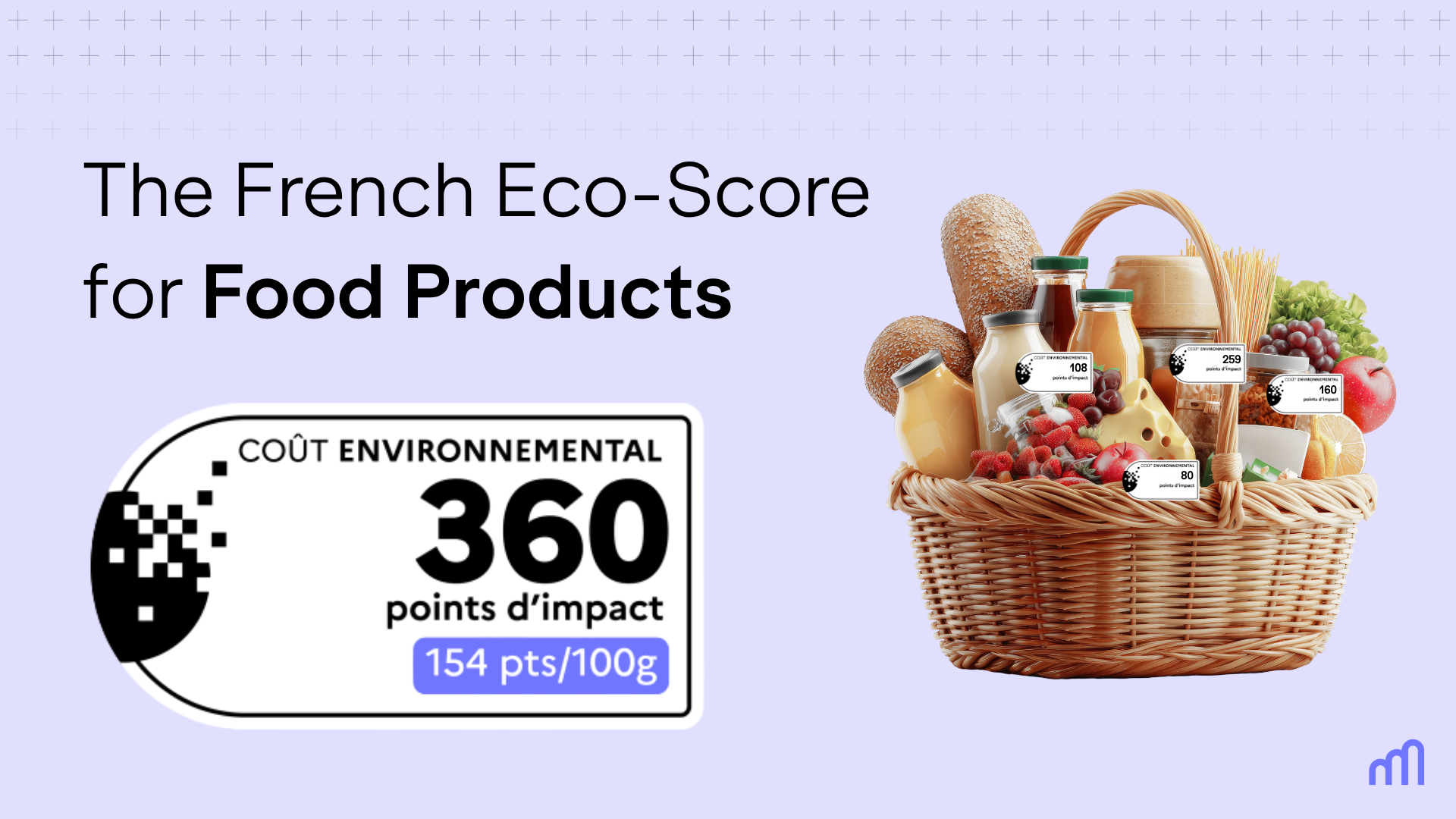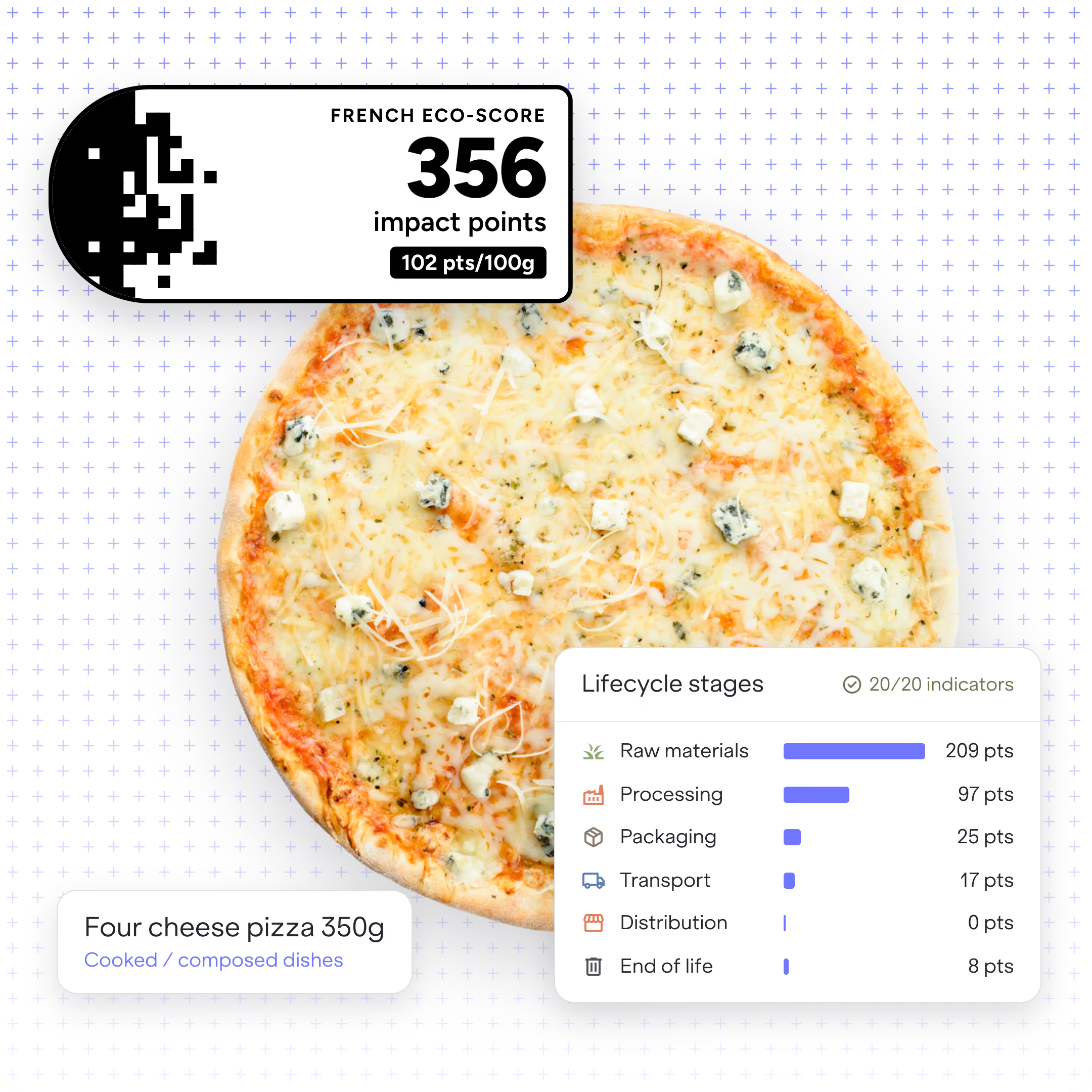
Most platforms calculate carbon. The Coût Environnemental requires 20 environmental indicators: 16 PEF indicators, including freshwater ecotoxicity (weighted 10x higher than the EU standard), water resource depletion, land use, and particulate matter, plus 4 ecosystem service bonus indicators for biodiversity. Carbon Maps calculates all 20, at the ingredient level, across your entire product catalog. Automatically.
The Coût Environnemental score changes based on where an ingredient comes from. French wheat has a different profile to imported wheat. Organic has a different profile to conventional. Carbon Maps models these variants at the ingredient level, so your scores reflect your actual supply chain, not a generic average.
Carbon Maps' methodology is fully compliant with Ecobalyse, the official calculation tool developed by ADEME and the French Ministry. Your scores are consistent with the national reference, auditable, and ready to share with retailers and display on pack.
E.Leclerc scored 6,000 products before any regulatory obligation existed. With Carbon Maps, the data infrastructure built for product carbon footprints feeds directly into the Coût Environnemental. No duplicate data entry. No starting from scratch.