Carbon Maps will be at Shoptalk Europe from June 3-5, 2024. Find us at booth M1. More info here →
The sustainability platform built for
the food industry
Translate emissions data into measurable operational and commercial outcomes.
they trust us
A client logo of AndrosA client logo of AndrosA client logo of AndrosA client logo of Andros
A client logo of Andros
A client logo of AndrosA client logo of Andros
A client logo of AndrosA client logo of AndrosA client logo of AndrosA client logo of Andros
Corporate Carbon Footprint
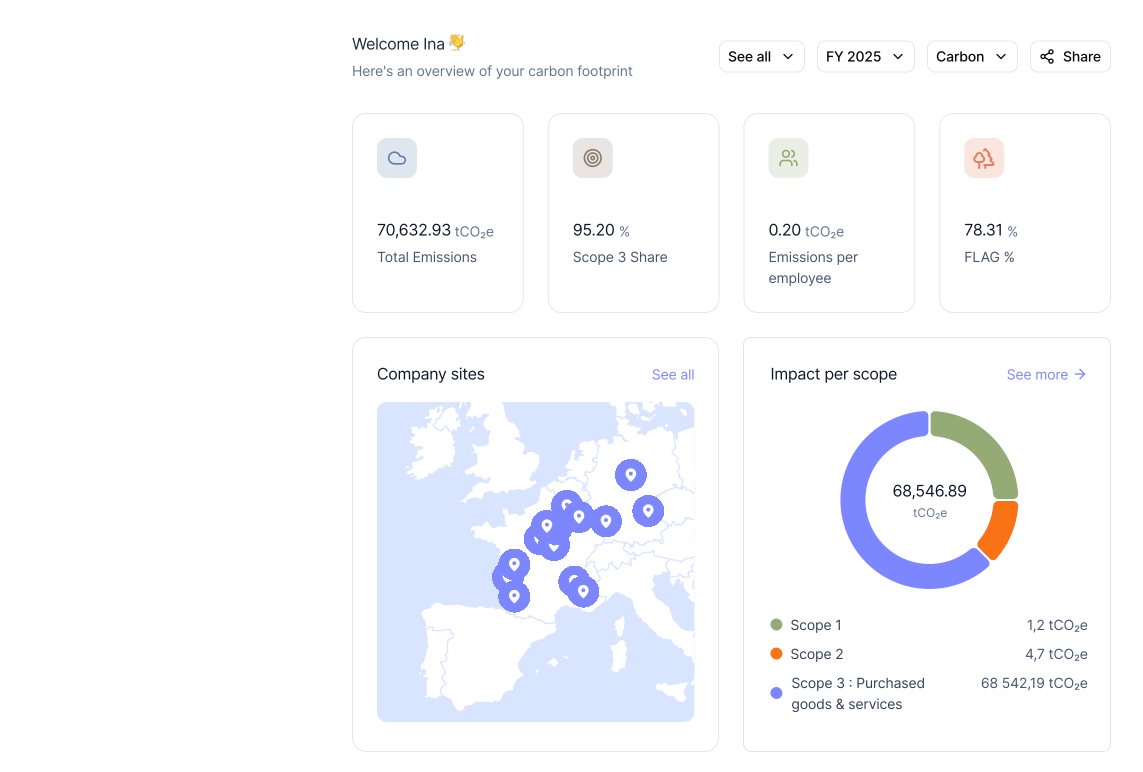
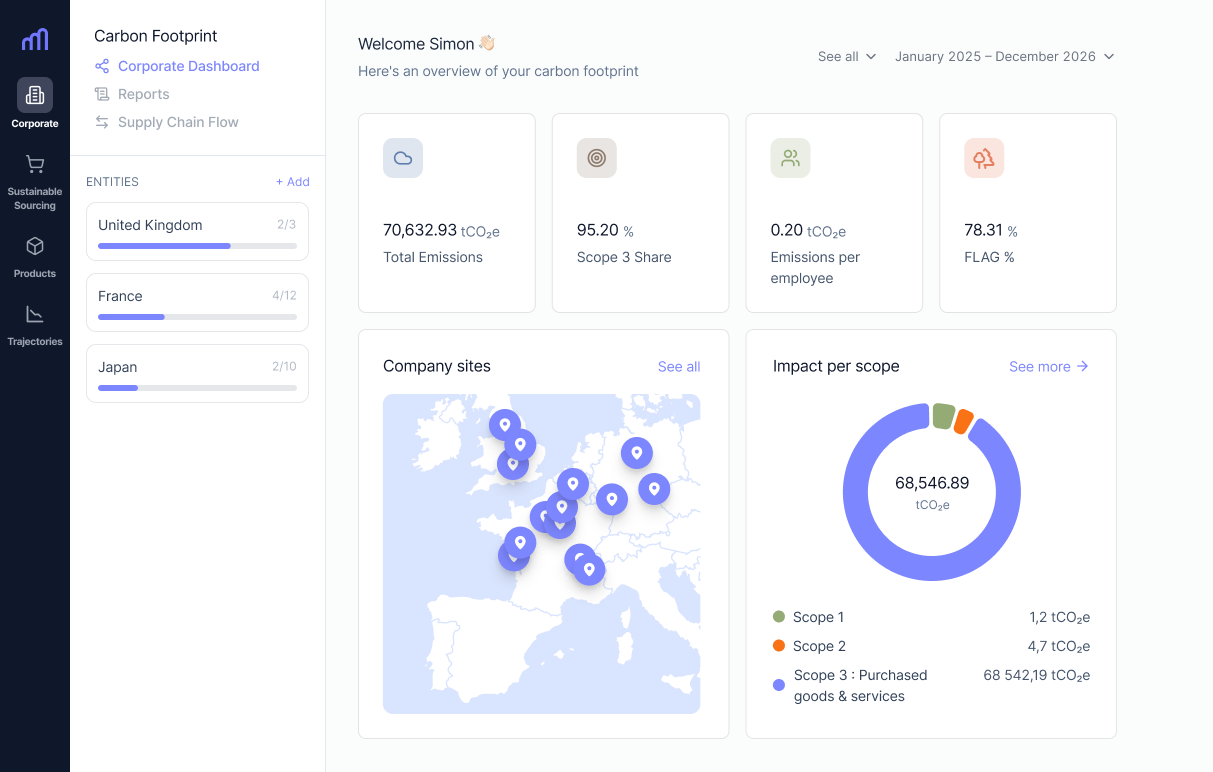
Dynamic, multi-level GHG reporting for audit-ready disclosures
Precision carbon accounting built for the realities of agricultural value chains.
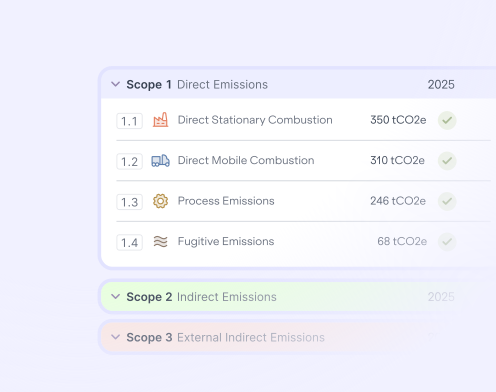
  1. Scope 1-3 coverage
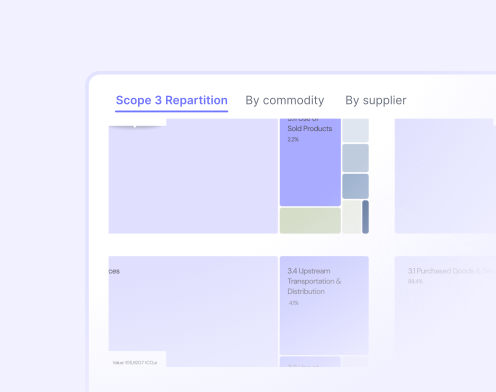
  2. Scope 3 LCA drill down
  3. Multi-level visibility
  4. Audit-ready reporting
Corporate Carbon Footprint: A Guide for the Food Sector
Read
01
Scope 1-3 coverage
Automated emissions inventories and modeling aligned with GHG Protocol
02
Scope 3 LCA drill down
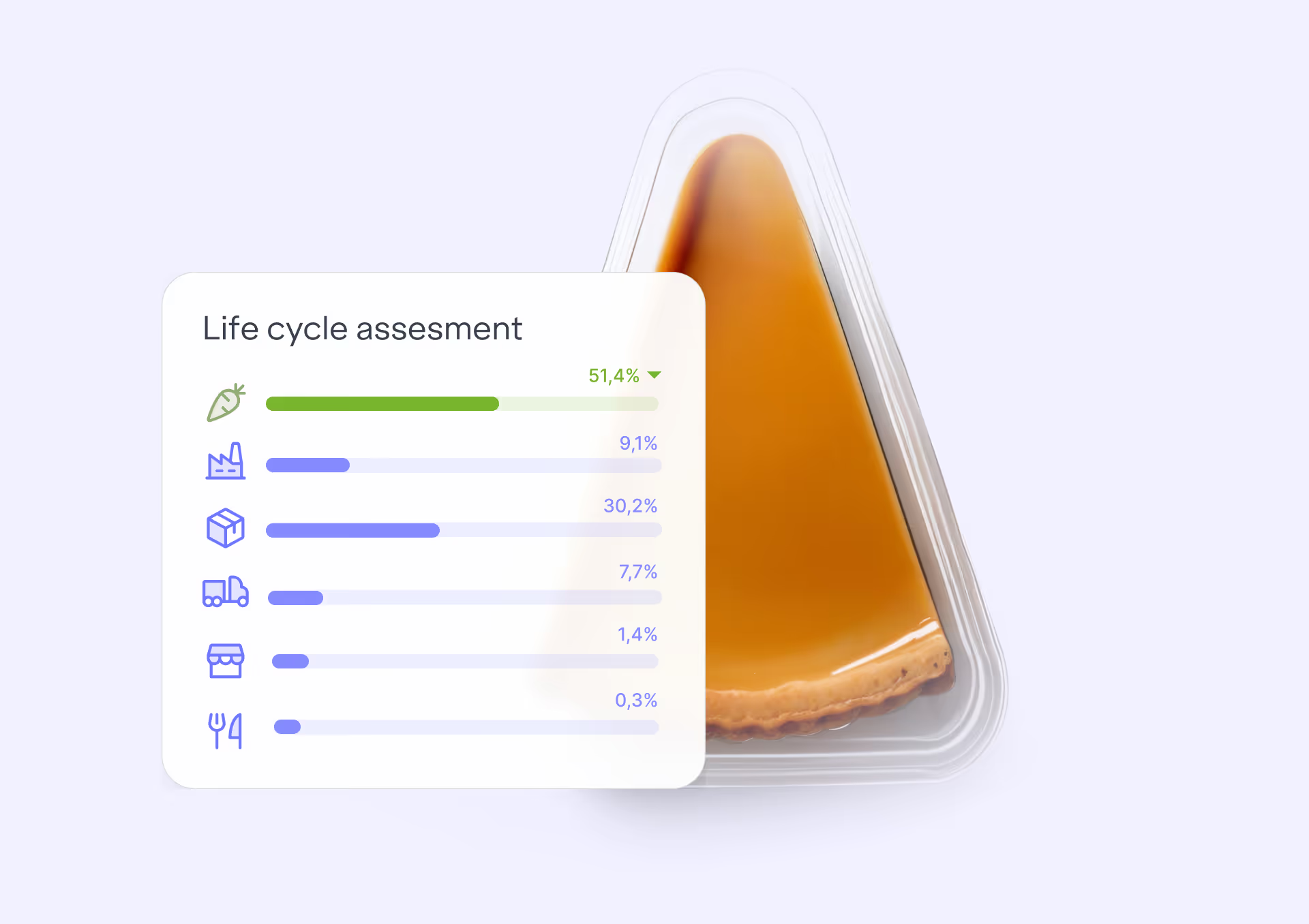
Pinpoint high-impact upstream and downstream emissions via LCA data
03
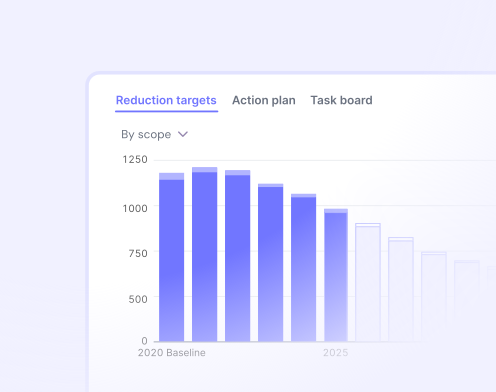
Trajectory simulation
View emissions across corporate, business unit, site or product levels in a single dashboard
04
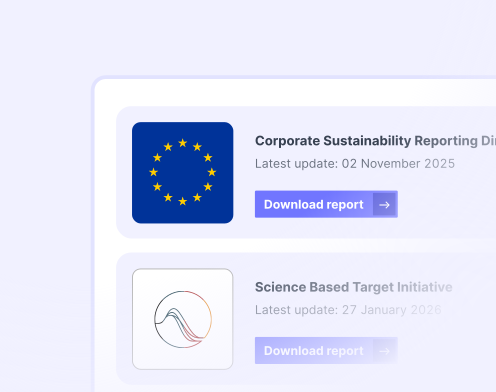
Audit-ready reporting
Generate on-demand, framework-aligned, and fully audit-ready KPIs
“Carbon Maps carried out a complete carbon assessment (Scope 1 to 3), giving us clear visibility of our environmental impact.”
Product Carbon Footprint
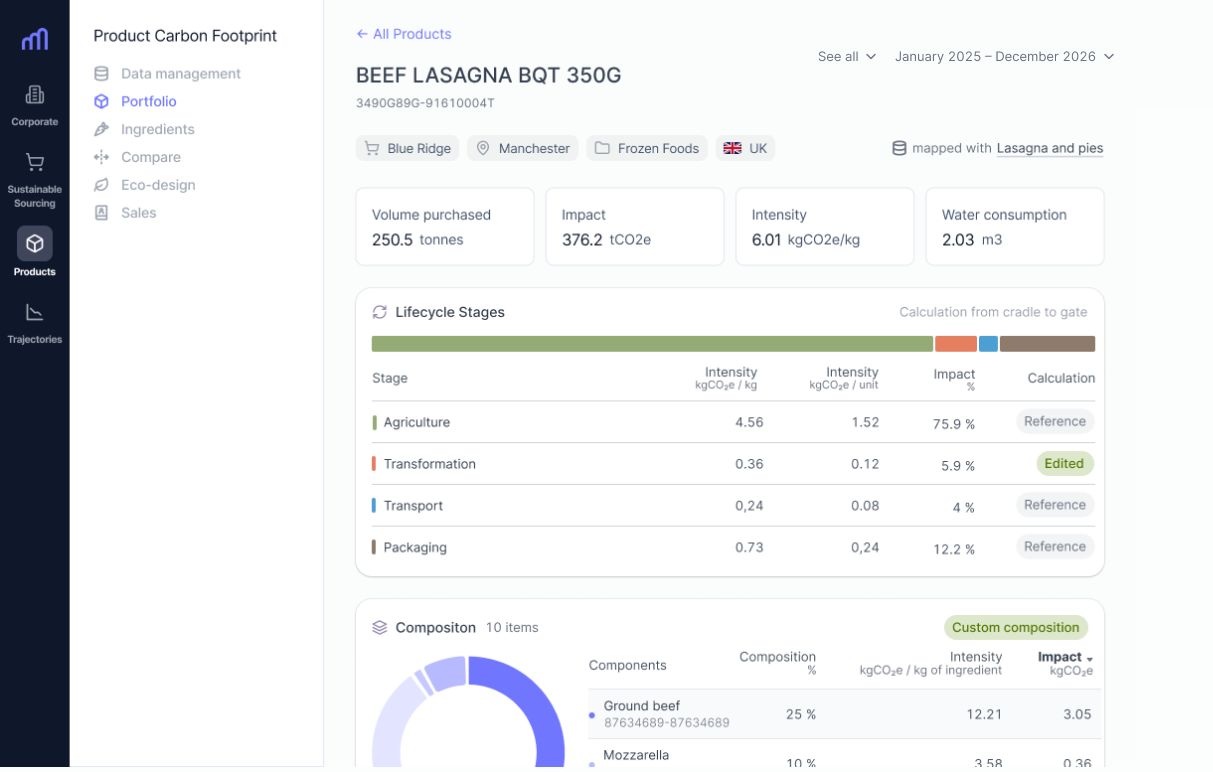
Automated and granular
product- and packaging- level 
assessments at scale.
Rapid footprinting that bridges the gap between targets and results.
Automated PCFs
Dynamic product carbon footprints that update as reality changes
Automated LCAs
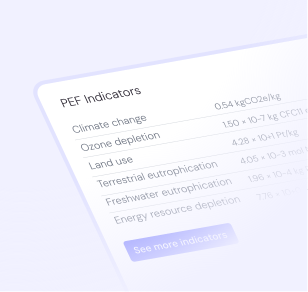
Run not only PCFs but full Product Environmental Footprint assessments across all 16 indicators
Supplier-specific emission factors
Collect & integrate real-world emissions factors
Phased granularity
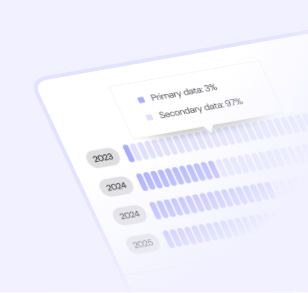
Start mapping your entire product portfolio with data you already have
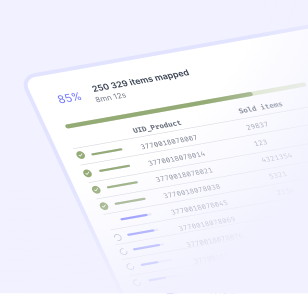
AI-Driven mapping
Automatically match and update emission factors for ingredients and materials
“Doing Product Carbon Footprints in spreadsheets was very tedious. We knew we had to level up with the right tools and call on an expert like Carbon Maps.”
Supplier Engagement
Allow your suppliers to share data
and report their reduction roadmap via a dedicated portal.
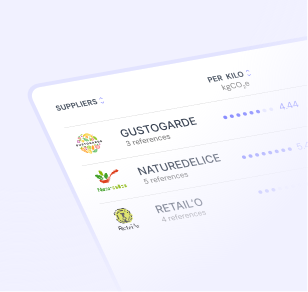
Mobilize suppliers, collect, and validate primary data, PCFs or ESG maturity.
Industry average
Supplier specific
Product Carbon Footprint
2.24 kgCO2e/kg
FLAG Emissions
1.65 kgCO2e/kg
Scope 3 emissions
448 013 TCO2e
Product Carbon Footprint
2.8 kgCO2e/kg
FLAG Emissions
1.9 kgCO2e/kg
Scope 3 emissions
560 000 TCO2e
“With Carbon Maps, we’ve replaced time-consuming manual processes with a structured digital system that gives us real-time insight into our suppliers’ sustainability maturity. It has made our supplier engagement more consistent, more meaningful, and better aligned with evolving regulatory demands.”
OUR ECOSYSTEM

Grounded in Science

Calculations based on standards and models validated by the scientific community and recognized internationally.

Carbon Maps' methodology and calculations meet ISO norms 14040, 14044 and 14067 and have been validated by Bureau Veritas, a global leader in testing, inspection, and certification services.
Learn more about our solution

Carbon Maps in
the press

See all features in the press
Thanks to Carbon Maps, we successfully completed our pilot project on product environmental footprints, showcasing the efforts implemented across our entire value chain—from upstream through our operations. Beyond the platform itself, their team helped structure our data and provided a rigorous, actionable methodology while adapting to the specifics of dairy products.
Carbon Maps has made it easier for Transgourmet to access carbon data.Thanks to emissions calculations, the platform now allows us to make carbon data a key element in our exchanges with our upstream suppliers and downstream customers, enabling us to make decisions that take this important issue into account.
Carbon Maps carried out a complete carbon assessment (Scope 1 to 3) for all Solinest Group companies, giving us clear visibility of our environmental impact. This is helping us effectively focus our emissions reduction efforts, emphasizing the importance of assessing our suppliers' sustainability practices as a key lever for progress.

Thanks to Carbon Maps' analyses, we have been able to identify the recipes and ingredients in our portfolio that have the greatest impact on the environment. The platform has also enabled us to link these results to our sales, and thus isolate the recipes that need to be reworked as a priority.
Carbon Maps automates the assessment of the carbon footprint of our private label food products, and its robust modeling helps us process and analyze thousands of SKUs. These assessments contribute to the reliability of our Scope 3 emissions calculations and are also used to provide transparent information to our consumers through our Carbon'Info, available for more than 6,000 products on the E.Leclerc website and drive-through service. This is a major step forward for E.Leclerc's ‘Savoir d'Achat’ approach.

See how our platform works.

Book a demo
For other inquiries:
Get in touch
PCF / LCA
Case Study
Retailer
Coopérative U moved from spreadsheets to a live, product-level view of Scope 3 across 200k SKUs. With Carbon Maps, teams see hotspots by category and supplier, trust the data, and use it in daily buying.
SBTi FLAG
Scope 3
Read about the biggest updates to the SBTi Corporate Net-Zero Standards V2 November 2025 draft: Scope 1-3 target setting, the replacement of BVCM, and stronger rules for assessment, assurance and claims.
Case Study
Food Service
How a renowned luxury hotel used Carbon Maps to transform thousands of supplier PDFs into a comprehensive carbon footprint, taking the first measurable step toward a more sustainable approach to modern luxury dining.
Case Study
PCF / LCA
A French bottled water producer used Carbon Maps’ PCF solution to reveal packaging and transport as major emission drivers, unlocking reduction levers such as recycled PET, optimized bottle formats, and sustainable logistics.