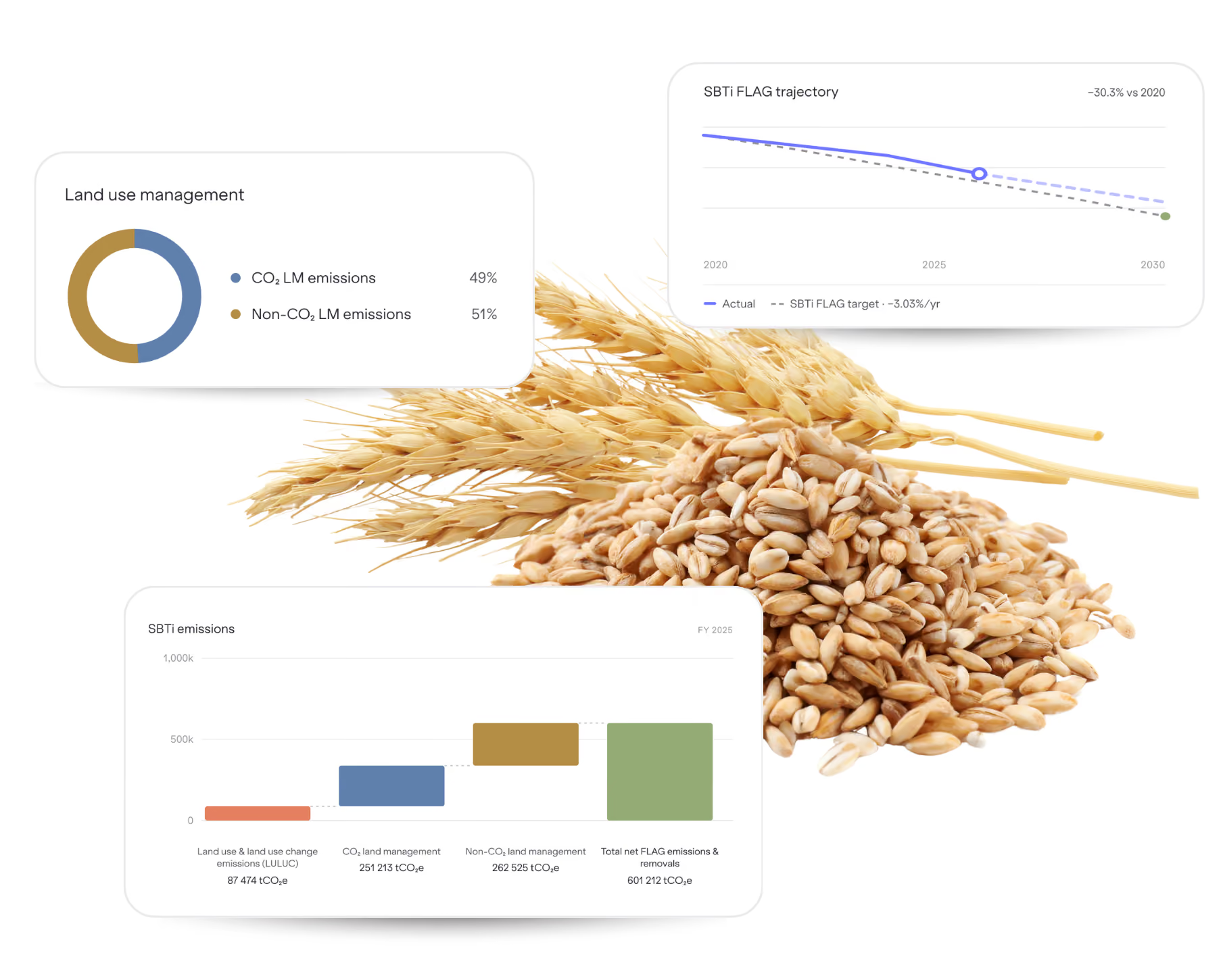
Food companies must set a FLAG target whatever their emission profile, and most of their footprint sits on farms they don't own or operate. Three things make the reporting hard:
Land-based emissions happen on farms deep in your supply chain, so the data has to come through your recipes, ingredients and suppliers rather than your own operations.
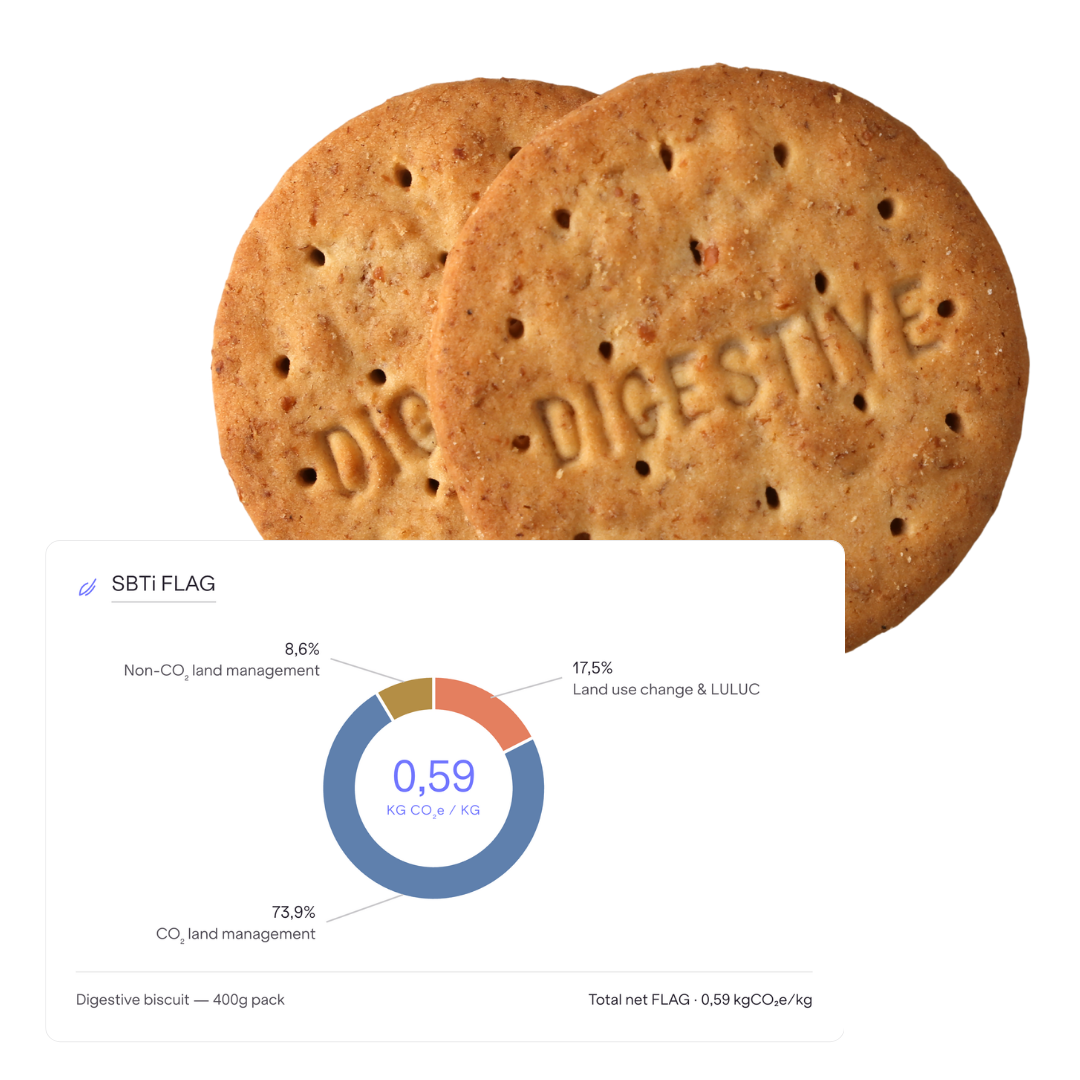
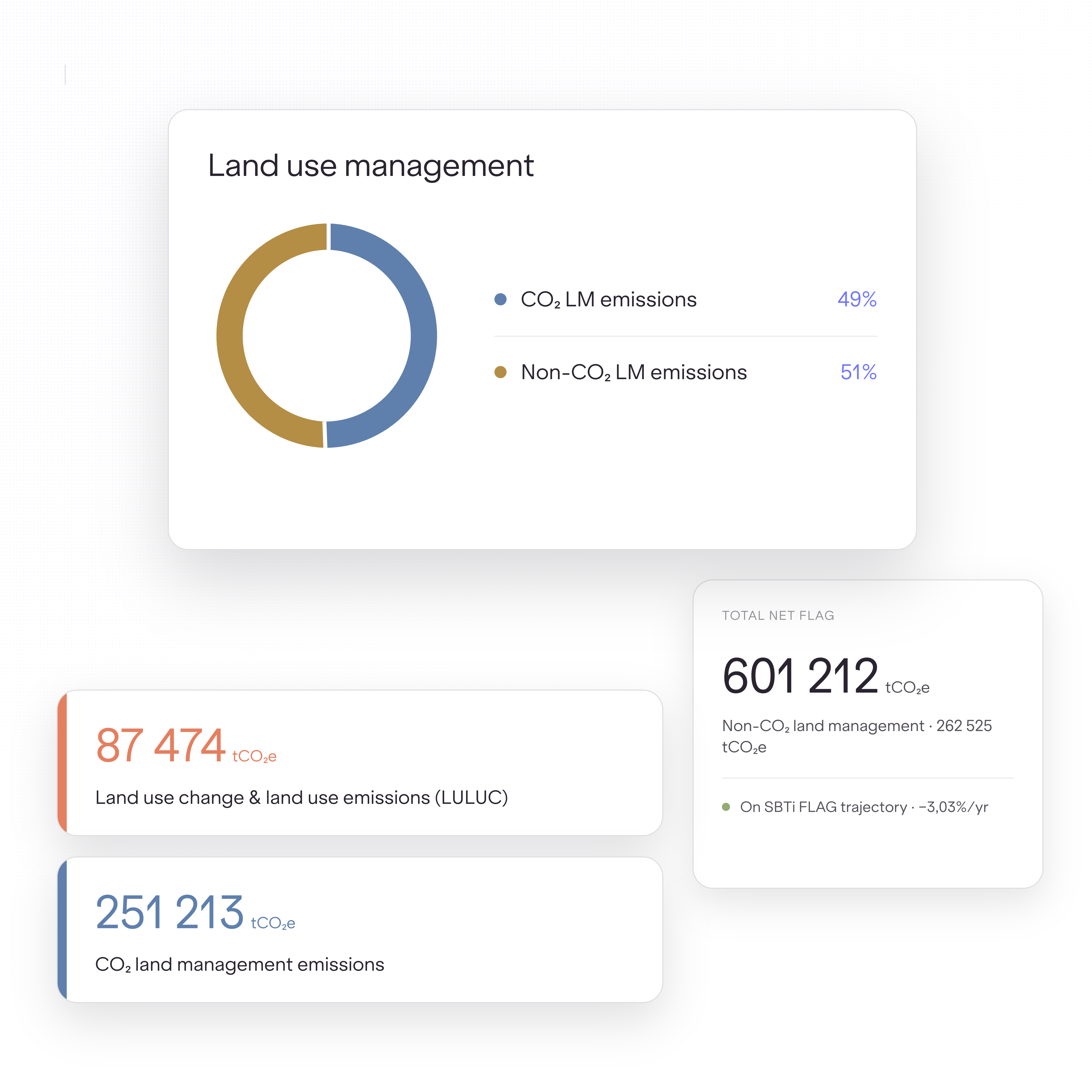
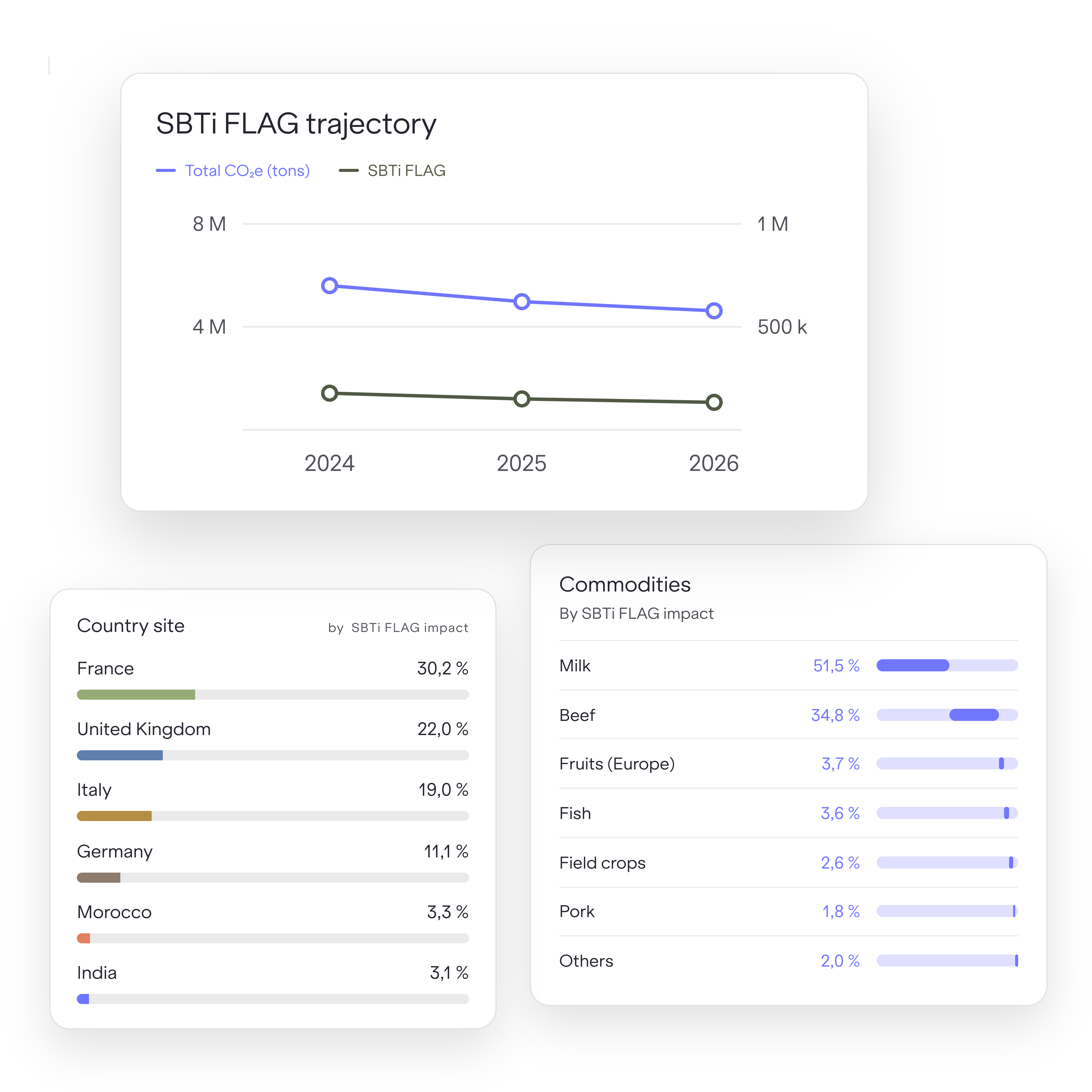
SBTi asks for FLAG separated from non-FLAG, and FLAG broken into land-use change, land management CO₂ and land management non-CO₂. Spend data and sector averages cannot draw that line across a range of thousands of products.
FLAG Guidance V1.2 changed the no-deforestation timeline in March 2026, and the GHG Protocol Land Sector and Removals Standard takes effect on 1 January 2027, so your inventory has to stay comparable as the method evolves.
of global greenhouse gas emissions come from forest, land and agriculture, the third-highest-emitting sector after energy and industry.
minimum reduction in FLAG emissions by 2050 under SBTi's long-term FLAG target.
L'assurance limitée implique qu'un tiers vérifie vos chiffres. Carbon Maps est conçu pour qu'ils tiennent.



Notre comptabilité carbone est validée par Bureau Veritas selon les normes ISO 14040, 14044 et 14067, et notre méthodologie PACT V3 est validée de manière indépendante par TÜV Rheinland selon la norme ISO 14064-3. Les référentiels que votre auditeur reconnaît déjà.
Chaque chiffre conserve sa traçabilité jusqu'au document source et à la version du facteur d'émission utilisé. Lorsqu'un auditeur s'interroge sur la crédibilité de votre Scope 3, vous disposez de la piste d'audit, et non d'une simple estimation.
Une base de données produit pérenne recalcule votre empreinte à chaque exercice de reporting : vos données restent comparables et prêtes pour l'audit à mesure que les exigences évoluent vers l'assurance raisonnable.